

NAAC
Institution Best Practice
Innovative initiatives adopted by the institution to enhance quality education, employability, and holistic student development.
Best Practice 01
Innovative Teaching and Training for Rural Students to Develop Employability Skills
Objectives of the Practice
- Train students in life skills, professional ethics, teamwork, and communication skills to improve career opportunities.
- Develop a positive learning environment where students and faculty can share innovative ideas and solve real-world challenges.
- Empower students through personality development programs to enhance their talents, interests, confidence, and leadership qualities.
The Context
- TKEC is located in Mecheri Town Panchayat, where most families are economically underprivileged.
- A majority of students belong to below-poverty-line families.
- The institution promotes entrepreneurship, creativity, innovation, productivity, and employment generation.
- Students from rural backgrounds require additional skill-based training to compete successfully in today's professional world.
- Education is a fundamental right that empowers individuals and contributes to the social and economic development of society.
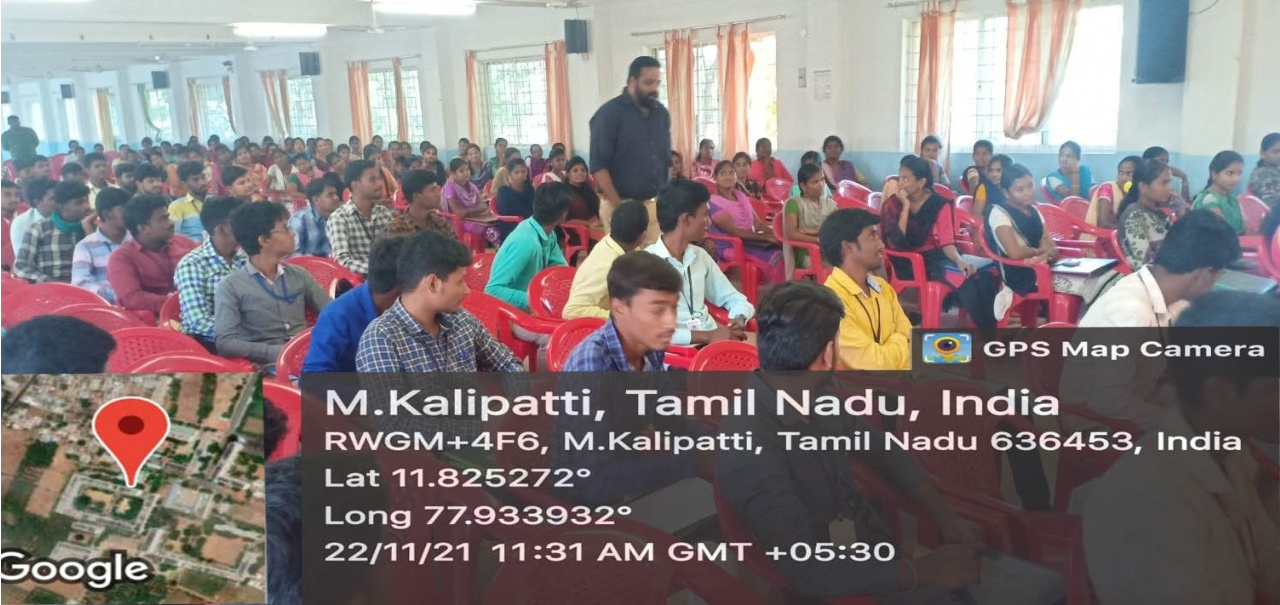
The Practice
- Soft Skills, Language & Communication Skills, Life Skills (Yoga, Physical Fitness, Health & Hygiene), ICT and Computing Skills training programmes.
- Personality Development Programmes are conducted for students of every year with expert trainers from various organizations covering Communication Skills, Time Management, Body Language & Professional Etiquette, Goal Setting, Presentation Skills, Confidence Building, Leadership, Stress Management, Work-Life Balance, Mind Management and Decision Making.
- Students are encouraged to participate in internship programmes during vacation to strengthen industry interaction and practical exposure.
- Industrial visits are organized every year to expose students to real-time industrial practices and technologies.
- Regular Employability Skill Development and Value Added Programmes are conducted.
- ICT-enabled classrooms and laboratories support technology-based teaching and learning.
- Well-equipped laboratories with cutting-edge technologies and Virtual Lab facilities enhance practical learning.
- Online aptitude tests and multiple-choice assessments are conducted regularly for placement preparation.
- The institution provides financial assistance to faculty members for participating in National and International Conferences.
Evidence of Success
- Continuous improvement in academic performance and examination results.
- Skill development initiatives have significantly improved employability, leading to placements in reputed organizations.
- Students have gained confidence, leadership qualities and the ability to face professional challenges effectively.
- The percentage of students pursuing higher education and campus placements has increased consistently every year.
Problems Encountered & Resources Required
- Financial constraints prevent some deserving students from attending specialized training programmes; the institution provides financial support whenever possible.
- Retention of experienced faculty members remains a challenge.
- Declining interest among students towards technical education.
- Balancing skill development programmes with the university curriculum is difficult due to the extensive syllabus.
- Limited awareness among students regarding changing industrial trends and expectations.
- Need to motivate students towards entrepreneurship and innovation.
- The affiliating university should integrate soft skills, employability skills and entrepreneurship programmes into the curriculum.
- Professional trainers, video lectures, online aptitude practice, company-specific mock tests and digital learning resources are essential for effective training.
Best Practice 02
"Not Me But You" – Service to Society
NSS, YRC & Rotaract promote the spirit of selfless service, social responsibility, leadership, and community development.
Objectives
- Promote social awareness through NSS, Youth Red Cross (YRC), and Rotaract activities.
- Understand the principles of Humanity, Impartiality, Neutrality, Independence, Unity, and Voluntary Service.
- Identify community needs with a sense of social and civic responsibility.
- Apply knowledge to solve individual and community problems.
- Develop leadership, teamwork, and service-oriented values among students.
The Context
- The NSS, YRC and Rotaract units actively organize and participate in community welfare programmes.
- Student volunteers gain practical experience by working with rural communities.
- Awareness programmes focus on blood donation, health, hygiene, disease prevention and social responsibility.
The Practice
- Community service activities are planned and executed every academic year.
- NSS, YRC and Rotaract units organize programmes with active support from faculty members and students.
- Service is extended to the public and parents whenever opportunities arise.
- Major activities include Solid Waste Management, Tree Plantation, Green India Mission, Drug Awareness, Free Eye Camps, Clean India Mission, COVID-19 Vaccination Camps, Health & Hygiene Awareness, Dengue Prevention, Road Safety, Energy Conservation, Rainwater Harvesting, Swachh Bharat Mission, Higher Education Awareness, Blood Donation, AIDS Awareness Rally, Independence Day Rally and White Cane Day observance.
Evidence of Success
- Students develop democratic values, leadership qualities and social responsibility.
- Higher education awareness programmes motivate rural students to pursue advanced studies.
- Community participation has improved through awareness programmes on hygiene, dengue prevention, road safety, environmental conservation and public health.
- Voting awareness campaigns have strengthened civic participation among the public.
Problems Encountered
- Community expectations are high while available resources are limited.
- A structured volunteer selection process is required for effective NSS camps.
- Parents need greater awareness of the importance and benefits of NSS, YRC and Rotaract activities.
- Students require orientation about village issues before participating in camps.
- Adequate financial support and regular monitoring by the University are essential for successful programme implementation.
Notes
- The University should provide timely feedback on survey reports submitted by colleges.
- Students join NSS, YRC and Rotaract for social service, leadership development, experience and certification.
- Continuous evaluation and innovative practices can further enhance the effectiveness of NSS, YRC and Rotaract activities.